
Service and the Shape of Partnership
The Five Love LanguagesThis thread traces practical help as a bond that can either affirm a partner or become coercive labor.
increasing Bearing strength in each event
 decreasing
Bearing strength in each eventdecreasingCare in Courtship
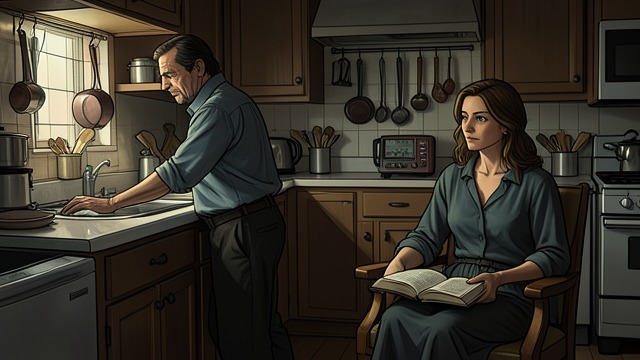
Help Comes Naturally
Mark participates
Mark helps Mary with household chores, school projects, and church preparations. His involvement feels natural to him and meaningful to her.
Affection becomes associated with action
Mary remembers those efforts as evidence of his love. Their shared work creates a pattern that she expects to continue after marriage.
Daily Work in Marriage

Tasks Become Uneven
Different household models
Mark assumes that Mary will manage the home because that is what he saw his parents do. Mary expects him to help as he did while they dated.
Affection is misread
Each partner's behavior reflects a different expectation, leaving both feeling unloved. Practical labor becomes a central measure of whether they are partners.
A Spouse Helps at Home

A New Question
Bob changes his approach
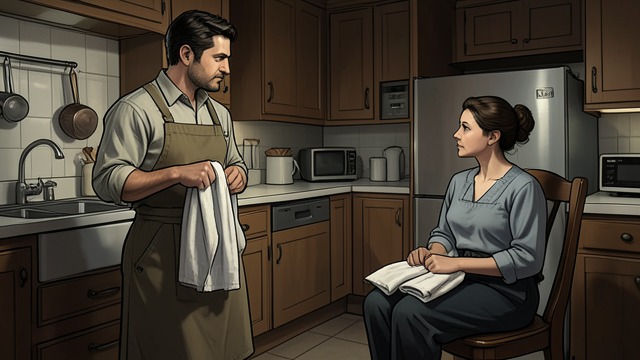
Bob begins asking his wife what he can do to help each evening. His behavior surprises her after years in which housework seemed solely her responsibility.
Learning takes practice
Early efforts are clumsy: bleach ruins towels, and a bar of soap enters the garbage disposal. His imperfect learning nevertheless communicates willingness.
Service Without Servitude
Voluntary Care Matters
A boundary is necessary
The book rejects treating a spouse as an object or using guilt and fear to extract service. No one should have to surrender a will to prove love.
Love protects dignity
A loving partner can say that harmful treatment is unacceptable. Service expresses affection when it is chosen, not when it sustains exploitation.
Partnership Reconsidered
Shared Work Frees Time
Household tasks change
Bob learns to handle regular chores and helps his wife. Because she no longer has to do everything, they gain more time together.
Roles become flexible
Their marriage improves as both partners revise inherited assumptions about what husbands and wives should do. Practical cooperation becomes a shared language of regard.
During Mark and Mary's dating years
During the first two years of Mark and Mary's marriage
During the first weeks after a colleague attends a seminar
During the chapter's discussion of doormats and love
After Bob's new pattern has continued for three years
